
Decoding systemic fingerprints of pancreatic cancer



Pancreatic cancer represents one of the most daunting challenges in modern oncology: by 2030, it is projected to become the second leading cause of cancer-related death in Western countries.


≈ 80–85% of pancreatic tumors are diagnosed when the disease is already at an advanced stage.
≈ 15–20% of patients are eligible for surgical intervention at the time of diagnosis.
≈ 12–13% is the current five-year survival rate.

THE PROBLEM
Despite significant advancements in oncological research, early diagnosis remains the primary barrier to improving clinical outcomes
A biologically disease "Silent"
Pancreatic cancer is often defined as a "cold" tumor, characterized by a limited immune response and a low-inflammatory tumor microenvironment. Consequently, the disease can remain clinically silent for long periods, surfacing only in its advanced stages.

Current diagnostic technologies in development focus on detecting circulating tumor molecules in the blood, such as:
- Circulating tumor DNA (ctDNA)
- Tumor RNA
- Tumor proteins or extracellular vesicles
These methods depend on a fundamental biological process: tumor shedding (the release of material into the bloodstream). In the early stages of the disease, this signal can be extremely weak or absent, limiting the effectiveness of early detection strategies.
A paradigm shift in diagnostics
The Ichnovia project stems from a different scientific inquiry:
What if, instead of searching for the tumor directly, we intercepted how the tumor alters the body?
Even when very small, a tumor is not biologically neutral. Its presence progressively modifies the body’s molecular balance, generating systemic alterations in the circulating proteome. The disease signal may therefore emerge not necessarily from molecules produced by the tumor itself, but from the body’s systemic response to its presence. This concept represents a potential paradigm shift in early oncological diagnostics.

Ichnovia’s scientific approach
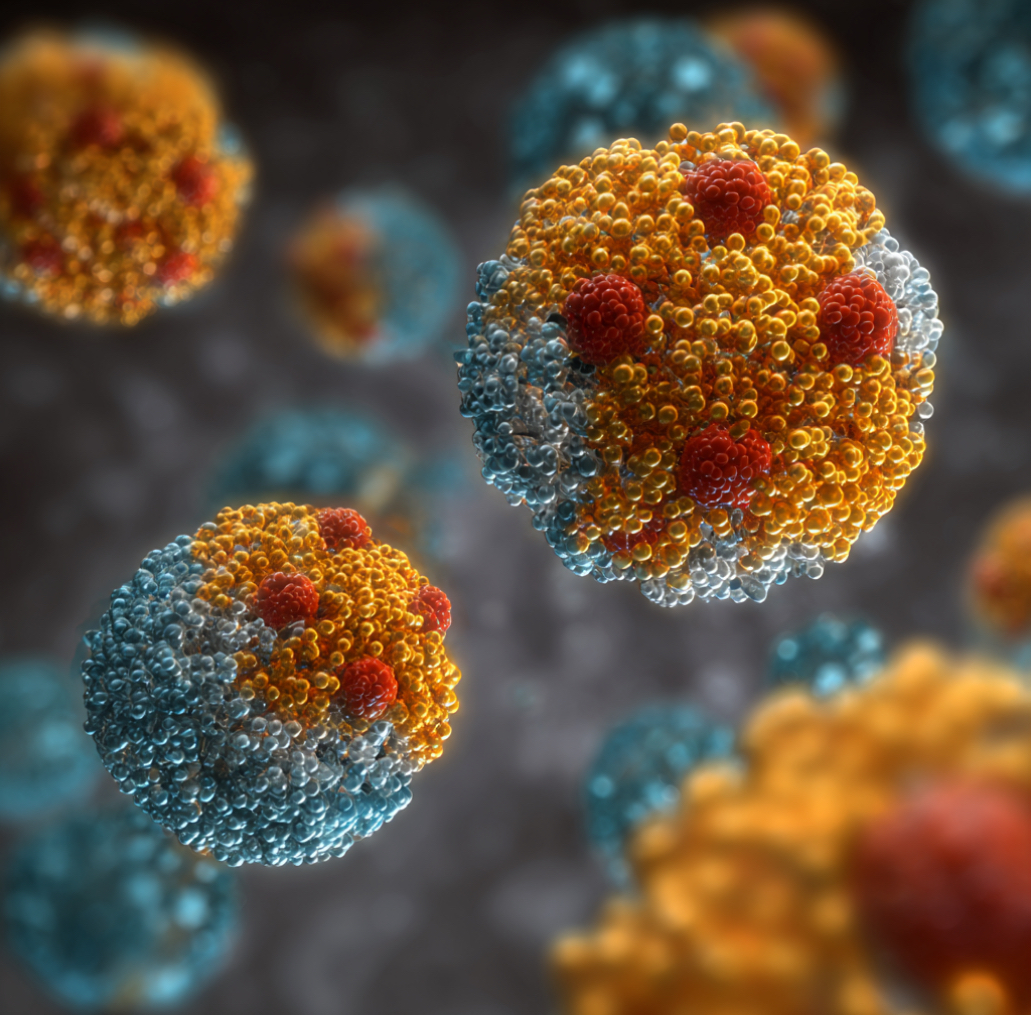
The technology developed by Ichnovia is based on the interaction between nanoparticles and blood plasma. When nanoparticles come into contact with plasma, proteins adsorb onto their surface, forming a “protein corona.”
This corona serves as a fingerprint that is extremely sensitive to the body’s physiopathological state. Nanoparticles act as molecular interfaces, capable of capturing and organizing complex protein patterns present in the plasma.
The composition of the protein corona is analyzed using advanced techniques and algorithmic models. The diagnostic signal is not derived from a single biomarker, but from the decoding of emerging systemic signatures within the protein corona.
From tumor detection to decoding the systemic response
This approach represents a fundamental departure from many liquid biopsy strategies. While conventional technologies search for circulating tumor molecules, the Ichnovia platform aims to decode the body’s systemic response to the tumor.
In other words, the system does not merely look for the tumor in the blood; rather, it analyzes how the entire biological system reacts to its presence, intercepting systemic alterations that can emerge even in the earliest stages of the disease.

A fingerprint of the disease
01.
TRADITIONAL DIAGNOSTICS
Traditional diagnostics are often based on single biomarkers or small molecular panels.
02.
ICHNOVIA
The Ichnovia platform adopts a radically different approach: the diagnostic signal emerges from the analysis of complex signatures generated by the interaction between nanoparticles and plasma proteins. These signatures represent a systemic fingerprint of the disease. This allows for the interception of biological signals reflecting the pathology before the tumor releases significant amounts of biomarkers into the blood.
Toward a new standard of care.
Ichnovia's objective is to develop an In Vitro Diagnostic (IVD) test for the early detection of pancreatic cancer. It is conceived as a first-level screening tool—simple, scalable, and designed for large-scale screening programs in at-risk populations.
The test is being developed according to the REASSURED criteria promoted by the World Health Organization (WHO), aiming to make early diagnostics:
1 / ACCESSIBle
2 / scalable
3 / applicable to large populations
THE VISION
Detecting pancreatic cancer in its earliest stages could radically transform therapeutic prospects. Early diagnosis significantly increases the probability of curative surgery and can improve patient outcomes. Decoding the early systemic signals of the disease opens new possibilities to intervene sooner—and save more lives.


A team of global excellence
Certified expertise and recognized leadership.
- Top 2% World Scientists: Our scientific direction is led by researchers included in Stanford University's prestigious global ranking.
- 30-Year Track Record: Our management team boasts thirty years of experience in investment fund management and business scalability.
- Elite Medical Network: We collaborate with leading high-volume centers for pancreatic cancer treatment, ensuring access to unique clinical databases.
Ichnovia Highlight
we have been selected by Innovit for Cohort 21 | Biotech: